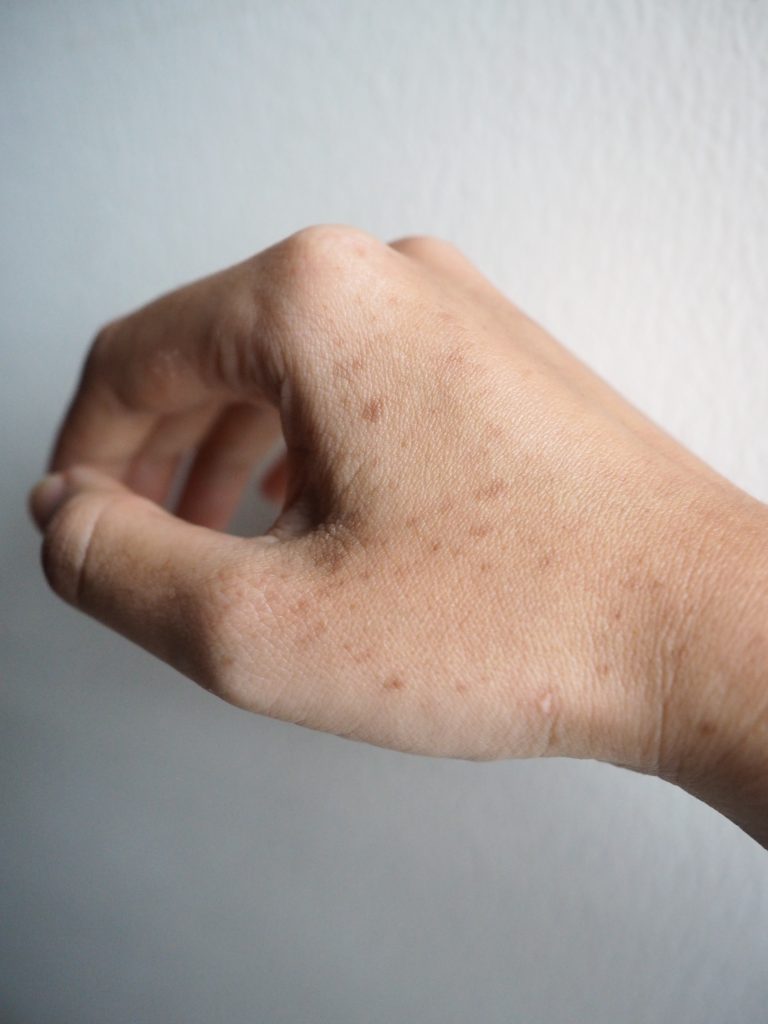
Individuals with less melanin have a lighter skin tone, while those with more melanin have a darker skin tone.
What are pigmentation issues?
Pigmentation refers to the colouring of your skin. Those with darker skin tones have more melanin than those with light skin tones. Pigmentation issues are varied and can occur to anyone, as these issues are typically due to a problem in melanin production.
Some common types of pigmentation issues include:
Hyperpigmentation: dark patches of skin due to excess and overproduction of melanin that differs from one’s usual skin tone is called hyperpigmentation. Hyperpigmentation disorders and conditions include post-inflammatory hyperpigmentation (PIH), sunspots/liver spots, age spots, melasma, and freckles.
Hypopigmentation: hypopigmentation is caused by a lack or reduced amount of melanin in the skin, resulting in lighter pigmentation. This causes patches that are light or different from the individual’s skin tone. Examples of hypopigmentation issues and disorders include albinism, vitiligo, and pityriasis alba.
What causes pigmentation issues?
Our skin pigment comes from melanin, a substance our skin cells create. Therefore, hyperpigmentation issues typically occur due to damaged or unhealthy melanin that causes it to clump and darken the skin in patches. Hypopigmentation happens when the body cannot produce enough melanin, leading to an absence of colour on the skin.
What causes these pigmentation issues? The answer may be complicated to pinpoint as several factors can cause hyper and hypopigmentation. The most common factors that trigger pigmentation issues are:
Excessive sun and UV light exposure
A natural part of the ageing process
Genetics and family history of pigmentation issues
Hormonal changes and disorders
Metabolic disorders
Adrenal disorders
Certain medications
Dermatitis
Skin injury and trauma, such as blisters or wounds
Hyperpigmentation caused by sun exposure, genetics, or other factors typically occurs as dark patches on the face.
Are pigmentation issues painful?
Most pigmentation issues do not cause pain. However, depending on the type of pigmentation issue, they can cause some itchiness or inflammation. In general, pigmentation issues do not greatly impact one’s everyday life or cause excessive pain and discomfort but commonly affect mental health.
Pigmentation issues can cause poor self-esteem and a lack of self-confidence, especially when it is present in visible areas of the body, such as the face and hands. Therefore, many people seek treatment to reduce or eliminate pigmentation from their faces and bodies.
Who is at risk of pigmentation issues in Singapore?
Pigmentation issues vary and are common, so anyone in Singapore is at risk of developing them. However, certain factors put some at a higher risk.
These include:
Age
Excessive sun exposure
Dark skin tone
Inflammation or injury
Having a family history of pigmentation issues
Hormonal changes or fluctuations, such as in pregnancy
Pigmentation issues are typically identified through a visual examination.
Pigmentation issues often affect one’s self-esteem and mental health.
What are the options for pigmentation issues in Singapore?
Options for pigmentation issues include:
Clinical facials: our signature facials are recommended to aid in addressing pigmentation issues.
Topical creams: topical creams like retinol can help encourage an even skin tone.
Frequently asked questions
WHAT CAUSES PIGMENTATION ISSUES?
When your body makes too much melanin, your skin gets darker, leading to hyperpigmentation. On the other hand, if your body does not make enough melanin, your skin gets lighter, known as hypopigmentation. The reason that your body either produces too little or too much melanin depends on certain factors such as genetics, hormones, injury, metabolic disorders, or other skin conditions.
HOW CAN I FIX MY PIGMENTATION?
Depending on the type of pigmentation issue and the severity of the condition, you can fix pigmentation problems in many ways. These include retinoids, topical creams, and facials.
WILL PIGMENTATION EVER GO AWAY?
In some cases, dark patches or dark spots fade away over time. However, it can take a long time, and new patches can occur, making it difficult for pigmentation issues to resolve fully.